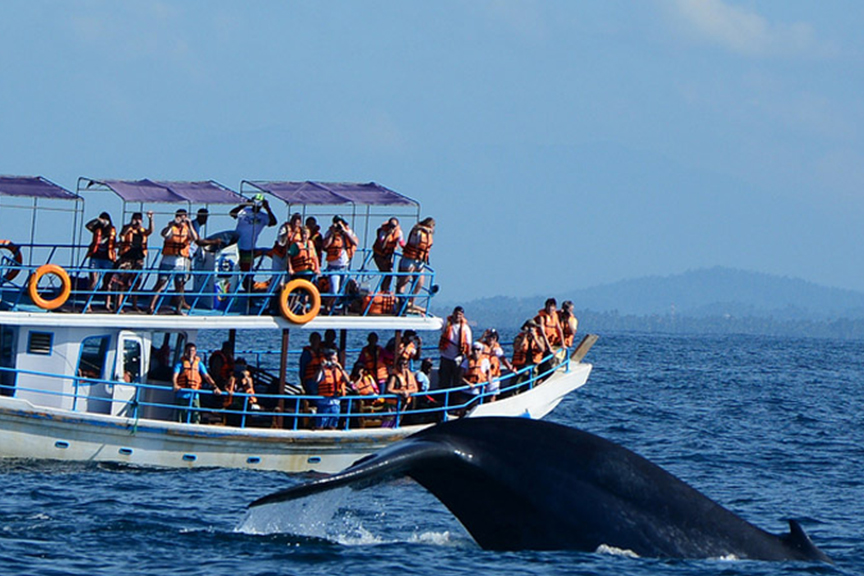
Sri Lanka is best known internationally for blue whale watching, but the same warm, nutrient-rich waters also draw whale sharks — the largest fish in the ocean. Sightings are less predictable than the island's famous blue whale tours, but two coastal spots in particular have built a reputation for whale shark encounters.
Mirissa — South Coast
Mirissa is Sri Lanka's most famous marine wildlife hub, primarily known for blue whale sightings, but many operators running combined whale and dolphin tours also keep watch for whale sharks along the way. The best window for whale shark encounters here runs roughly from November to April, when the southern seas are calmer and better suited to longer boat trips.
Kalpitiya — Northwest Coast
Kalpitiya, better known for its large pods of spinner dolphins, is increasingly recognized for dedicated whale shark snorkeling trips. The deep waters off this peninsula attract a range of large marine species, and the peak season here runs slightly longer, from roughly October to May, with calmer seas and clearer visibility for snorkeling during this stretch.
Mirissa vs. Kalpitiya at a Glance
| Location | Peak Season | Known For |
|---|---|---|
| Mirissa | November – April | Blue whales, combined whale/dolphin/shark tours |
| Kalpitiya | October – May | Dolphin pods, dedicated whale shark snorkeling |
What to Expect on a Tour
Whale shark tours typically run as half-day excursions, with time built in for travel to likely sighting grounds and for snorkeling once an animal is located. Basic swimming ability helps, but many operators can accommodate beginners, and snorkeling gear is usually provided along with brief instruction before you're in the water.
What to Bring
- Reef-safe sunscreen and a hat
- A light jacket for the boat ride out
- Motion sickness tablets if you're prone to seasickness
- A waterproof dry bag for your phone or camera
Choosing a Responsible Operator
Sri Lanka regulates marine wildlife tours under the Sea Mammals (Observation, Regulation and Control) Regulations, though enforcement varies by operator. Look for boats that limit speed and approach distance around the animals, cap group sizes in the water, and brief guests on responsible interaction before entering the sea. A calmer, well-regulated encounter is generally a better one — for the wildlife and for you.
Getting to Mirissa or Kalpitiya
Mirissa sits on the southern coast, roughly a two-hour drive from Colombo, while Kalpitiya is reached heading north along the northwest coast. Both are far easier to reach with your own vehicle than by relying on public transport schedules, especially given early tour departure times. A self-drive rental also lets you pair a whale shark trip with other stops along the coast — see our guide to popular destinations around Sri Lanka for route ideas.
Timing Your Trip
If whale sharks are the priority, plan your visit within the November–April window for Mirissa or the slightly wider October–May window for Kalpitiya. For a broader look at how Sri Lanka's seasons vary by coast, see our guide on the best time to visit Sri Lanka.
Planning a marine wildlife trip to Sri Lanka?
Book Your Self-Drive Rental with iWay →Final Thoughts
Whale shark sightings in Sri Lanka aren't guaranteed the way blue whale sightings often are in Mirissa, but the chance to snorkel alongside the ocean's largest fish is a rare and memorable experience. Time your trip to the right season, choose a responsible operator, and Mirissa or Kalpitiya can deliver an encounter well worth the early start.


